Preview Doris Diaries
Chapter One: Introduction
Doris Kaminski thought she knew exactly how the rest of her life would unfold. But after the loss of her beloved husband, Harold, even the simplest tasks seem unfamiliar—including opening a stubborn pickle jar. As Doris begins to navigate life on her own, she discovers that strength often arrives in unexpected ways through old friendships, kind neighbors, and the quiet courage to ask for help. The Pickle Jar is a heartfelt introduction to Doris's world, reminding us that every ending is also the beginning of another chapter worth telling.
.

Discover the Best Books Here

Chapter 1: The Jar, the Ladder, and the Nice Young Man Next Door
Doris Kaminski had counted fourteen of them in the three weeks since Harold's funeral tuna noodle, chicken and rice, something with cream of mushroom soup that she suspected came from a can but ate anyway because it was warm and someone had made it for her. The neighbors meant well. The church ladies meant well. Everyone meant extremely, exhaustingly well.
And then, as if by some unspoken agreement, the casseroles simply stopped. The phone calls thinned. The sympathy cards on the mantle began to curl at the corners.
Harold had been gone eleven weeks now. The world, apparently, had decided that was long enough to grieve.
Doris had not gotten that memo.
Chapter 1 continued
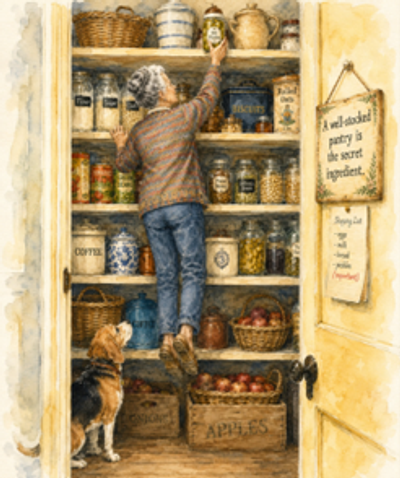
Doris did not fall. She would like that on the record. She did, however, make a sound, a sort of surprised squawk and grabbed the shelf with both hands, which meant she was now hugging the pantry shelf from a stepladder with a jar of pickles pressed against her collarbone.
It was in this position that she heard a knock at the back door.
"Mrs. K?" called a voice. "I saw your light on. I've got your mail, they delivered it to me by mistake again, are you... are you okay in there?"
That was Marcus. Twenty-six years old. Moved in next door in September. Brought her tomatoes from his garden without being asked, which Doris considered the mark of a genuinely good person.
"I'm fine!" she called back, in the bright, firm tone she used when she was not entirely fine.
A pause.
"Are you... in the pantry?"
Another pause.
"...Possibly," said Doris.
She heard the back door open, she really needed to remember to lock that and footsteps crossing the kitchen tile.
Marcus appeared in the pantry doorway. He looked at her. She looked at him. Biscuit wagged his tail.
To his very great credit, Marcus did not laugh. His mouth did do something, briefly, but he controlled it admirably.
"May I?" he said, holding out his hand for the pickles.
Doris considered her dignity. She considered the pickles. She considered the fact that her arms were getting tired.
"You may," she said.
He took the jar gently, set it on the counter, and offered his arm as she stepped down. Neither of them said anything for a moment. Biscuit sneezed again.
"Egg salad?" Marcus guessed, looking at the bowl on the counter.
"Egg salad," Doris confirmed.
"My grandmother made it with dill pickles too," he said. "Relish is not the same thing."
Doris pointed at him. "You," she said, "are a very intelligent young man."
She made enough egg salad for two.
Over lunch, Doris learned that Marcus worked from home, lived alone, and hadn't talked to anyone in person for four days either, not since his girlfriend moved out. He learned that Doris had once played semi pro softball, hated the word "moist," and had strong opinions about the designated hitter rule.
It was, she thought, a perfectly fine Tuesday.
But later, washing dishes, she glanced at the pantry shelf. At the stack of good china that hadn't come down since Harold's last birthday dinner.
She wondered, not for the first time, how much longer the yellow house was going to feel manageable. It had always been the two of them managing it together, him on the ladder, her handing things up, both of them pretending it wasn't a whole production. Now it was just her. And a beagle who sneezed at critical moments.
*Linda had been dropping hints about a "really lovely community" twenty miles away. Doris had been ignoring those hints with Olympic-level focus. This was Harold's house. Her house. The elm tree in the backyard was fifty years old now and she'd outlasted plenty of things that seemed permanent.
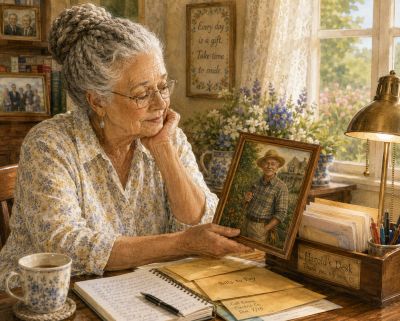
"Not yet," she said. Same as she said every night.
But the stepladder went back in the closet, and this time, Doris left it just a little more within reach. ---
**Next issue:** Doris receives a letter, not from Linda, and not a bill. The return address is from a town she hasn't thought about in forty years. And a name she once promised herself she'd never look up again.
*Don't miss Episode 2 of “The Doris Diaries”!